
From Menu Mix to Throughput: How Weather Impacts the Entire Service System

Keegan Wilson
Recent swings in the weather are a clear reminder of how profoundly conditions outside the restaurant shape what guests order, how they order it, and how operators need to run their day-to-day service. Just as importantly, it is not only major shifts but also smaller warm or cold spells that create meaningful opportunities to adjust operations, menu focus, and guest engagement in the moment.
The weather might be the most powerful menu engineer QSR brands don’t employ.
Every day, without touching pricing, promotions, or product mix, weather quietly reshapes how customers order - what they crave, how far they are willing to drive, and which channel they choose. And when conditions become extreme, those shifts accelerate fast.
Unlike planned campaigns, weather doesn’t roll out neatly. It shows up, and consumer behavior adjusts in real time.
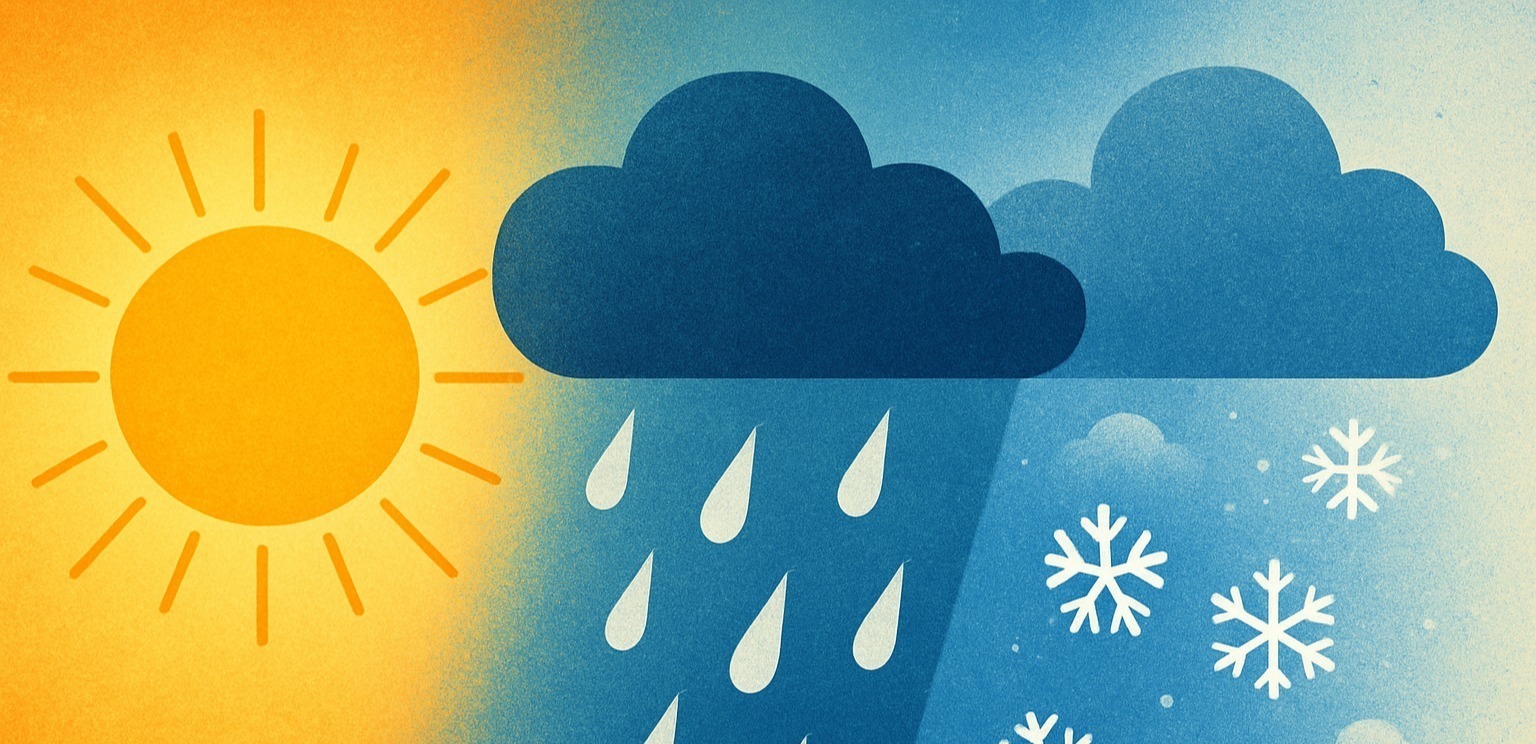
During heat waves, demand tilts toward cold beverages, frozen treats, and lighter options. Midday foot traffic often softens as customers avoid peak temperatures, while late-night and delivery orders rise. In sustained heat events, cold beverage and frozen item sales can spike by 15–30%, even when total traffic remains flat.
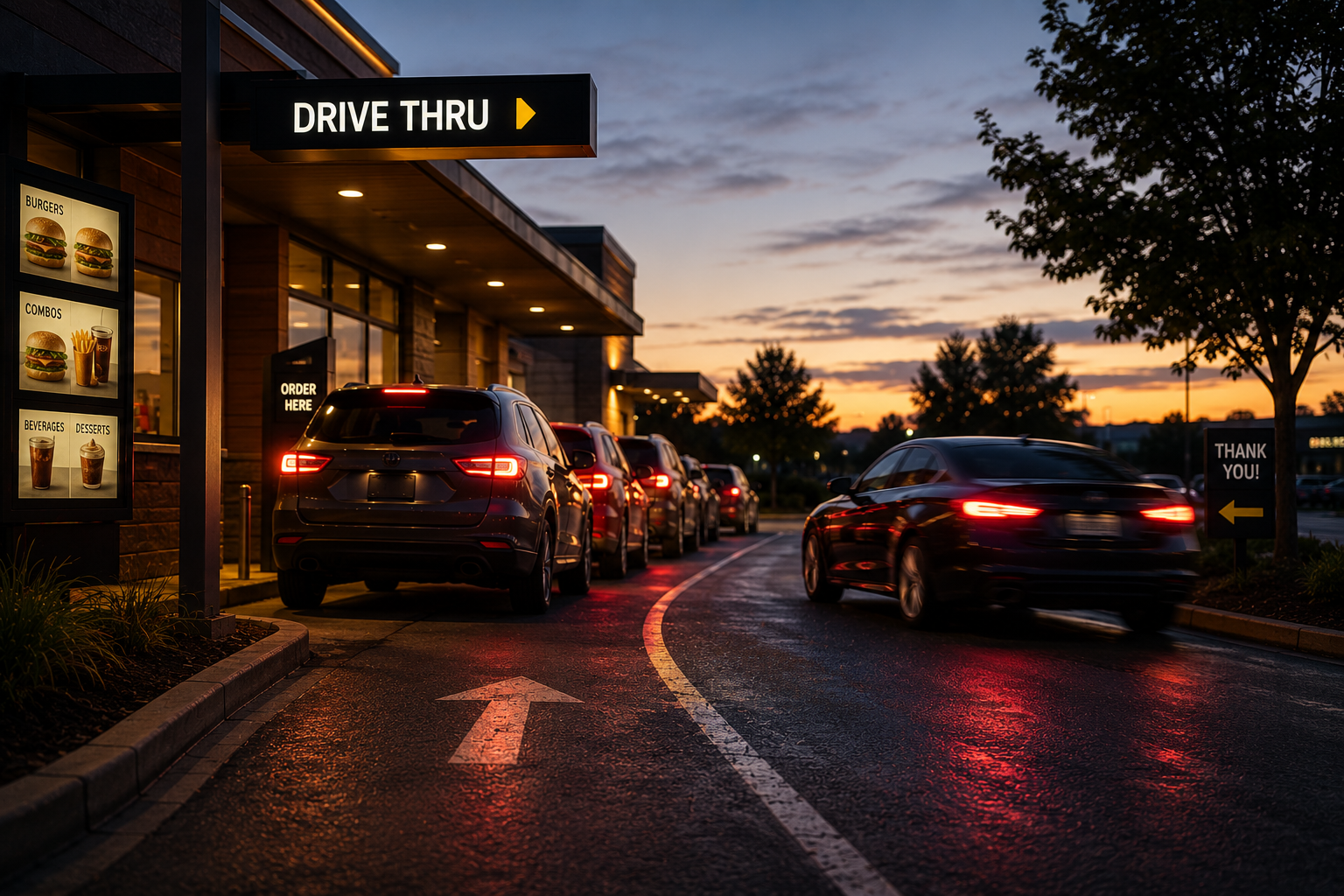
Rain tells a different story. Hunger doesn’t change but friction does. When it’s pouring, the mental cost of leaving home increases. Drive-thru outperforms dining in, bundled orders become more common, and outside order taking becomes a no go. The menu hasn’t changed, but the definition of “convenient” has.
Then there’s snow and severe weather. Foot traffic drops sharply. Delivery and takeout surge, sometimes by 25–40% in urban markets. Customers gravitate toward familiar, comforting items and predictable choices. In uncertain conditions, experimentation fades and defaults win.
What makes these patterns important isn’t just that they’re intuitive, it’s that they’re predictable.
Yet most menus, upsell strategies, and staffing plans remain static. The same recommendations surface whether it’s 95 degrees or a snowstorm. The same prep assumptions hold, even when the forecast signals a surge or slowdown hours in advance.
This creates a quiet but costly gap between how demand behaves and how teams are equipped to respond.
The brands that outperform during extreme weather aren’t guessing. They’re paying attention to signals - forecast changes, traffic shifts, channel mix - and acting before the pressure hits. Weather stops being a disruption and starts functioning like a leading indicator.
That’s where systems designed to connect those dots matter. Platforms like uKnomi’s inQ help teams track weather and traffic patterns in real time, translating external conditions into practical operational insight. Whether that means surfacing smarter menu suggestions during a heat wave, adjusting prep ahead of a storm, or aligning staffing to expected traffic, the goal is simple: stay ahead of demand instead of reacting to it.
Weather will never stop influencing behavior. The only question is whether it’s treated as background noise or as an operations driver.
Because tonight’s orders are already being shaped by the forecast. The operators who recognize that don’t just weather the storm, they engineer for it.
