

How AI Digital Assistants Are Rewriting QSR Performance

Keegan Wilson
Quick-service restaurants move fast, often faster than managers or staff can keep up with on their own. From unpredictable rushes to equipment hiccups to the constant pressure of customer expectations, even the smallest inefficiency can ripple into long lines, frustrated guests, and lost revenue. But a new era of Digital Assistants with access to Vision and Conversation AI is reshaping how QSRs operate.
Today’s Digital Assistants support both sides of the restaurant in different ways. For managers, they operate like a real-time control hub - surfacing insights, alerts, and performance trends across the operation. For frontline teams, the same assistant becomes an in-store partner that guides smart selling, reinforces best practices, supports guest engagement, and keeps flow on track. Together, they create a connected layer of intelligence that helps every part of the restaurant run smoother and more consistently.
A Smarter Command Center for Management
For management, a digital assistant becomes an operational partner, one that watches the restaurant’s rhythm and surfaces insights instantly. Strategic and tactical insights, paired with live, actionable feedback, help managers spot patterns early and address issues as they emerge.
Imagine getting notified that:
“Performance dips every Thursday at 2:30 PM for a specific store.”
The assistant doesn’t stop there. It highlights where the issue occurs — slower greetings, fewer upsells, delayed prep — and identifies the likely root cause, whether it’s equipment drag, low staffing, inventory gaps, system issues, large orders, or unexpected traffic.
This type of proactive intelligence shifts management from reactive problem-solving to proactive tactical decision-making. They can react quickly to adjust schedules, reposition or coach crew members, or catch issues like shortages and equipment problems to minimize the impact on service and sales.
Instead of relying on fragmented data or gut instincts, management gains a continuous, contextual understanding of what’s happening in their operation. It frees them to focus on coaching teams, optimizing throughput, strengthening guest engagement, and driving consistent, reliable performance across every shift.
A Confident Extra Pair of Hands
While management gains oversight, employees get support where they need it most: in the moment. The in-store digital assistant acts as a calm, knowledgeable teammate — one that reduces stress, speeds problem-solving, and helps crew members prioritize what matters during a rush or what resonates with a particular guest.
Take something as simple, but costly, as a down credit card reader that can go unreported or unresolved for days. The impact on speed, and more importantly guests aborting the line as they don't have cash results in a massive revenue loss. We've seen issues like this easily cause 30% drop in sales.
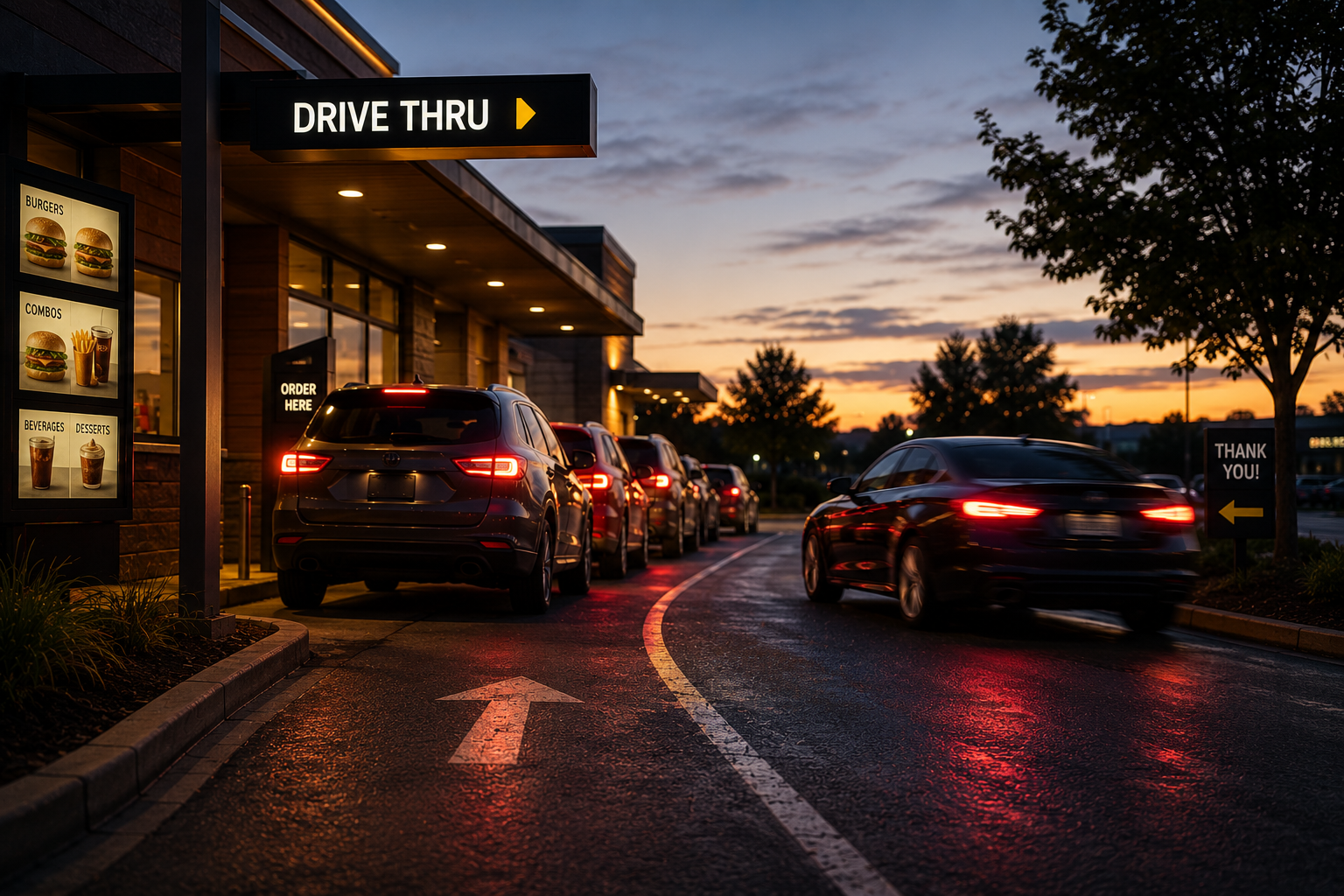
A digital assistant eliminates this blind spot. The moment the assistant detects an issue like where the vision AI spots cars aborting the line, and/or the conversation AI hears this comment during interactions, it alerts the team:
“Seems like the card reader at the window is off-line. Can you confirm?”
This simple confirmation step is intentional. Instead of forcing employees to troubleshoot in the middle of a rush, or worse, forget about the issue entirely, the assistant verifies and immediately escalates the alert to management. Leaders can then act quickly to resolve the problem, preventing the kind of week-long delays that quietly drain performance.
Whether it’s monitoring drive-thru flow, prompting upsells and contextual interactions, or guiding fast escalation of issues, the digital assistant keeps employees focused on delivering great service without friction.
One System, One Rhythm: Unified Flow Across the Restaurant
The same digital intelligence support management and staff, adapting to who’s using it. For management, the assistant operates as a control center — accessible anytime, anywhere — delivering real-time insights, performance patterns, and alerts that guide higher-level decisions. For employees, that same intelligence becomes an in-store partner, focused on the immediate: surfacing the most urgent tasks, keeping service fast and friendly, and supporting day-to-day execution without adding friction.
Two distinct experiences. One unified system.
And when these two modes work together, the restaurant moves with a single, steady rhythm. Management stays ahead of trends. Employees stay supported in the moment. Digital engagement improves, guest interactions become more consistent, and intelligent upsells happen naturally as part of the flow.
AI ensures that everyone, at every level, is acting on the right priorities at the right time.
The Shift: When Intelligence Joins the Workflow
Vision and conversation AI powered digital assistants are redefining what operational excellence looks like in QSR. By delivering clarity to managers, confidence to employees, and cohesion across the entire restaurant, these systems unlock a level of flow and performance previously out of reach. As more brands adopt them, one thing becomes clear: the future of QSR isn’t just faster, it’s smarter, more connected, and optimized at every operational level.
